Read your grandmother's letters.
Yiddish is the language of my home. I teach it one-to-one, in Litvish or Chassidish pronunciation, with the culture around it, the way it is spoken at home.
Today's Yiddish wordFree vault below. To start lessons with me, book a trial. Open the library
Free · no account
Today's Yiddish word
The page to share: https://lashon.online/yiddish
wilted
Read the word →The vault · fully free
Yiddish grammar library
The same explanations I write for students — how reading works, the binyanim, the grammar textbooks rush past. Not a teaser. The whole article.
Then
The app is a subscription. Lessons are a separate thing.
Flashcards Anki-style (add your own), reading, conjugations, quiz, conversation — none of that waits on a lesson. From $9/month. If you want a person across the table, that is the trial lesson.
How can a Yiddish tutor help with genealogy and family document translation?
I read your grandmother's letters with you, live, explaining the handwriting, the idioms and the cultural references. Lessons are in Litvish or Chassidish pronunciation.
Not sure which Yiddish they spoke? Which Yiddish did your family speak? takes thirty seconds.
I'm Yaacov Schlezinger, born and raised in Jerusalem. Yiddish is the language of my home.
Who teaches you
I'm Yaacov Schlezinger. I was born and raised in Jerusalem, where my family has lived since 1870.
Yiddish is the language of my home, and my Hebrew is native too.
I teach Yiddish in Litvish or Chassidish pronunciation: you pick one and we stay with it.
Lessons are one-to-one, online by video, in English or French. The first one is a 25-minute trial lesson, and it counts toward your first month if you continue.
Who this is for
Heritage speakers & reconnectors
Your grandparents spoke it. Your parents understood it but didn't pass it on. You hear echoes of it at family gatherings. You want it back — not as a museum piece, but as a living language.
Academic & literary Yiddish
You want to read Sholem Aleichem in the original. Or I.B. Singer. Or the vast Yiddish press archives. Or the Hasidic literature that's still being published today.
Hasidic community engagement
You work with, live near, or are part of a Hasidic community. You need practical Yiddish — not YIVO standardized, but the real spoken language of Williamsburg, Bnei Brak, or Mea Shearim.
Researchers & genealogists
You're tracing family history through Yiddish documents, letters, and records. You need reading proficiency and the ability to recognize handwriting conventions.
Your learning path
Structured, dialect-aware, and culturally grounded.
The Alef-Beys & Sound System
Master the Yiddish alphabet (different from Hebrew!), vowel system, and choose your pronunciation: Litvish or Chassidish.
First 400 Words & Basic Grammar
Core vocabulary, Germanic grammar foundations, basic conversation. Where Yiddish diverges from German.
Hebrew-Aramaic Component
The loshn-koydesh layer: Hebrew and Aramaic words that make Yiddish unique. How to read them, pronounce them, and use them.
Reading Fluency & Literature
Read real texts: newspapers, short stories, letters. Navigate between dialects. Understand the Yiddish literary tradition.
Advanced Conversation & Culture
Idiomatic Yiddish, humor, proverbs, cultural context. Be able to speak with native speakers in any community.
Tools built for Yiddish
Dialect-Aware
Litvish or Chassidish? I teach the pronunciation you pick and keep it consistent, instead of a mix of the two.
Root Explorer: Hebrew-Aramaic Layer
Yiddish contains hundreds of Hebrew and Aramaic words. The Root Explorer shows these connections, so your Hebrew learning reinforces your Yiddish (and vice versa).
Real Texts, Not Textbook Dialogues
Read actual Yiddish literature, letters, newspapers, and modern Hasidic publications — not invented classroom conversations.
Living Language Focus
Yiddish is spoken every day in Hasidic communities. I teach it as a living language, not a museum piece.
Cross-Language Bridge
Your Yiddish vocabulary is 15-20% Hebrew-Aramaic words. Learning Yiddish unlocks parts of Hebrew and Aramaic — and vice versa.
From a Yiddish-speaking home
Yiddish is the language I grew up with in Jerusalem. I teach it the way it is spoken, and read the old letters and books with you, not only a textbook.
"My grandmother spoke Yiddish but my parents didn't pass it on. I tried every resource I could find. Yaacov is one of the few Yiddish tutors online. I can now read my grandmother's letters. I cried the first time I understood a full paragraph."
Rachel K. — United States
A world worth remembering
These masterworks capture the Yiddish-speaking world — its prayer, study, warmth, and community. Learning the language is how you keep this world alive.
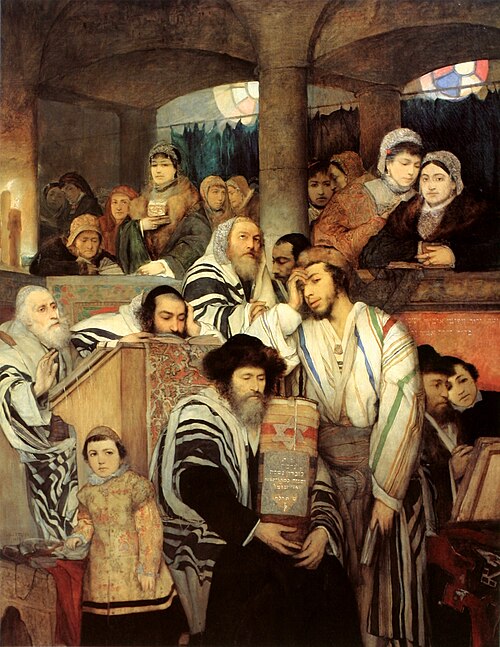
Jews Praying in the Synagogue on Yom Kippur
Maurycy Gottlieb, 1878
The communal prayer that bound generations together
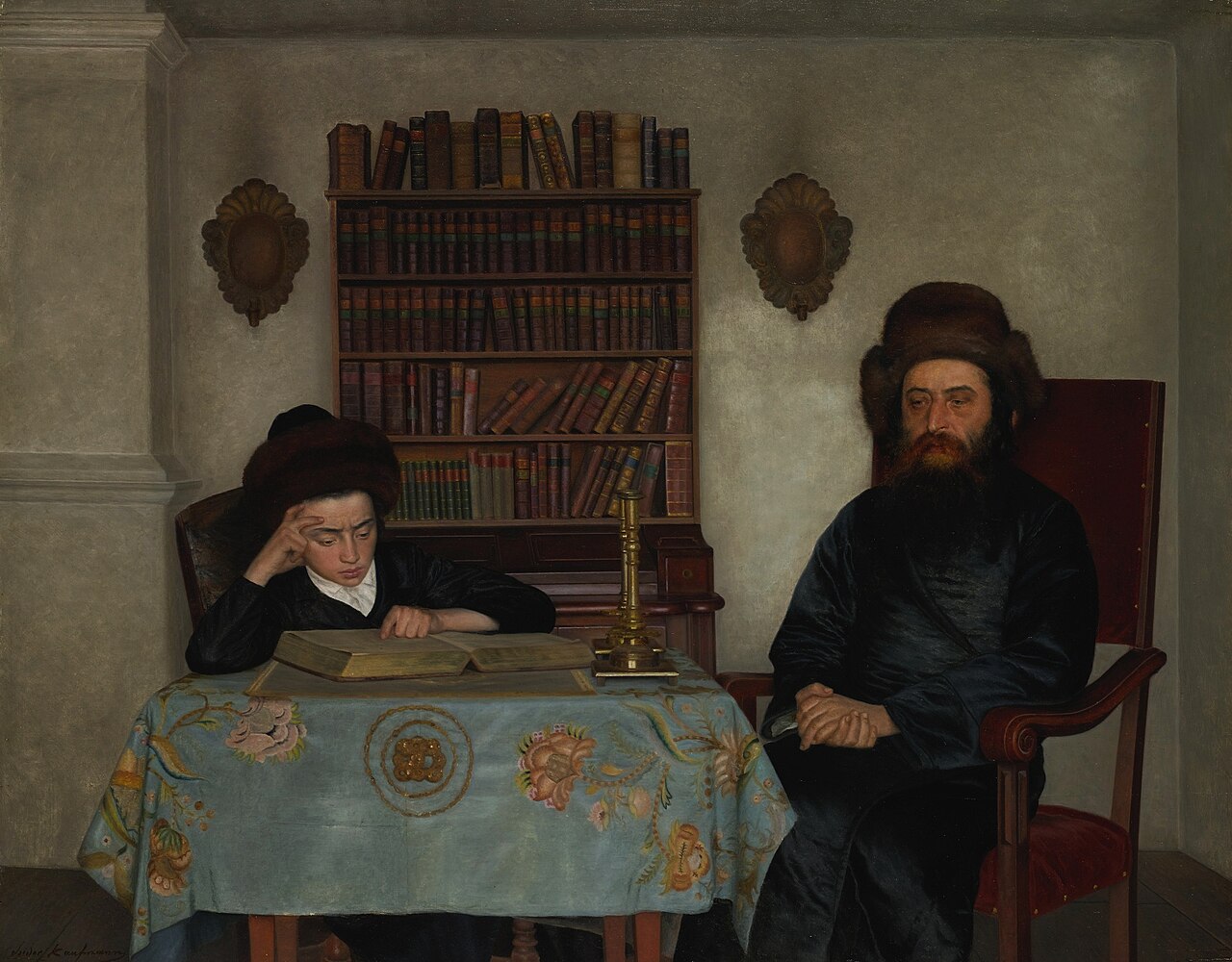
Rabbi with Young Student
Isidor Kaufmann
The unbroken chain of learning — teacher to student
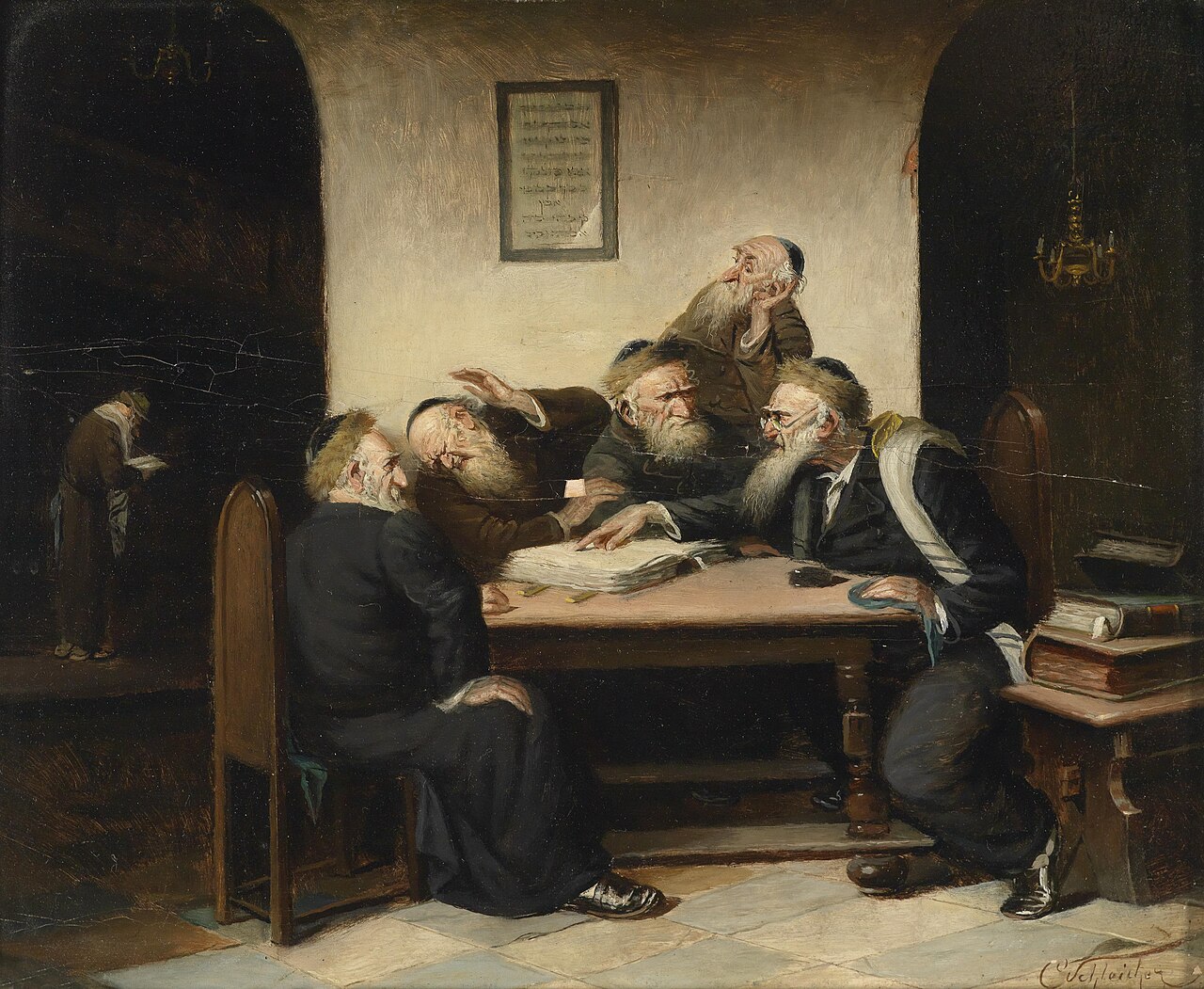
A Discussion of the Talmud
Carl Schleicher, 19th century
The animated debate that defined yeshiva life
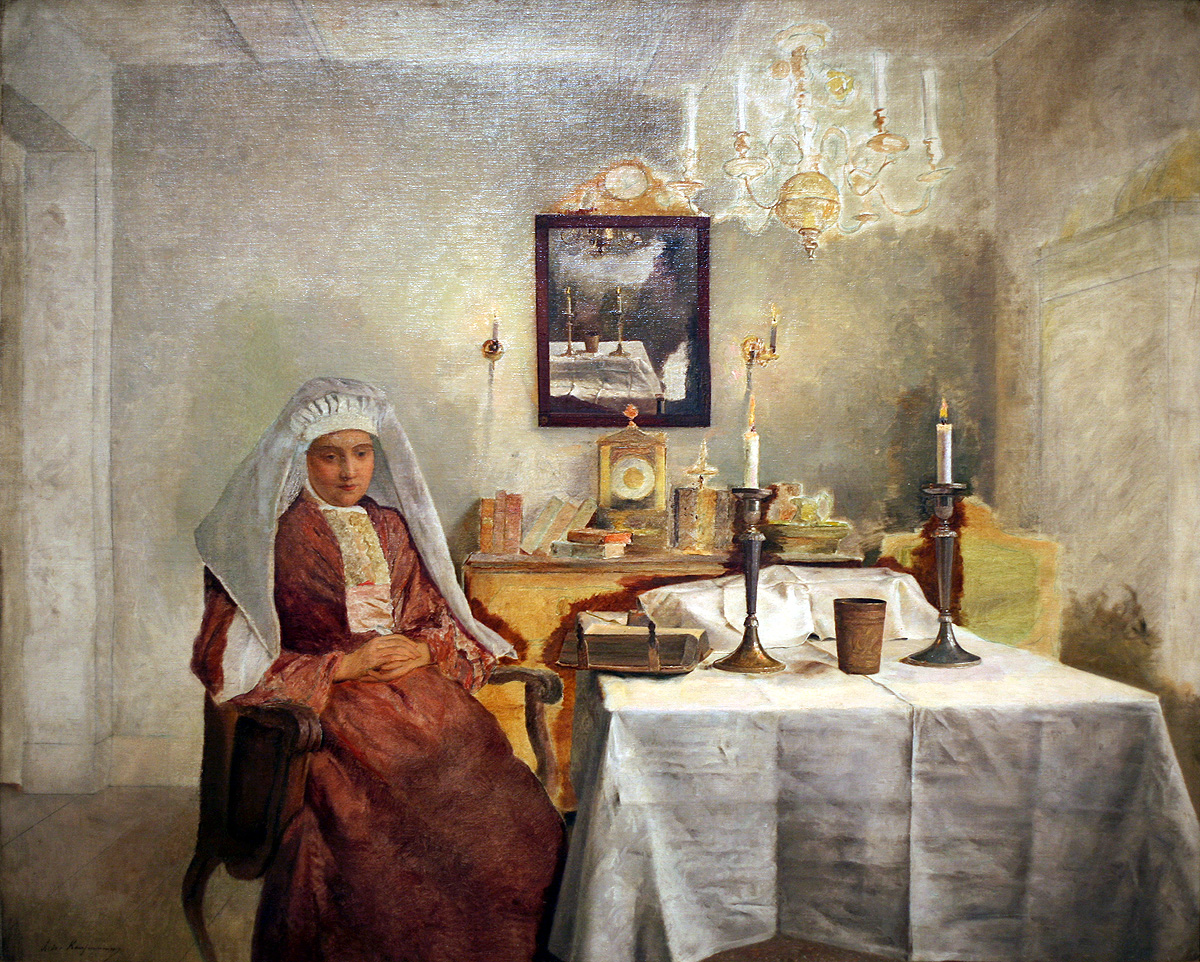
Friday Evening
Isidor Kaufmann, c. 1920
The warmth of Shabbat in a Galician home
All paintings are in the public domain. Artists: Maurycy Gottlieb, Isidor Kaufmann, Carl Schleicher.
Yiddish + Hebrew = deeper understanding
15-20% of Yiddish vocabulary comes from Hebrew and Aramaic. Learning one reinforces the other.
Don't let the language die with your grandparents.
The vault is free, and so is the first lesson with me.
Book a trial lessonRather practise on your own? See the app plans
Want a live teacher on a smaller budget? Join a small Yiddish group