Read the Torah in the language it was written.
Not through a translator's lens. Not filtered through Greek or Latin. Directly. Word by word. Root by root. The way it was meant to be read.
Today's Biblical Hebrew wordFree vault below. To start lessons with me, book a trial. Open the library
Free · no account
Today's Biblical Hebrew word
The page to share: https://lashon.online/biblical-hebrew
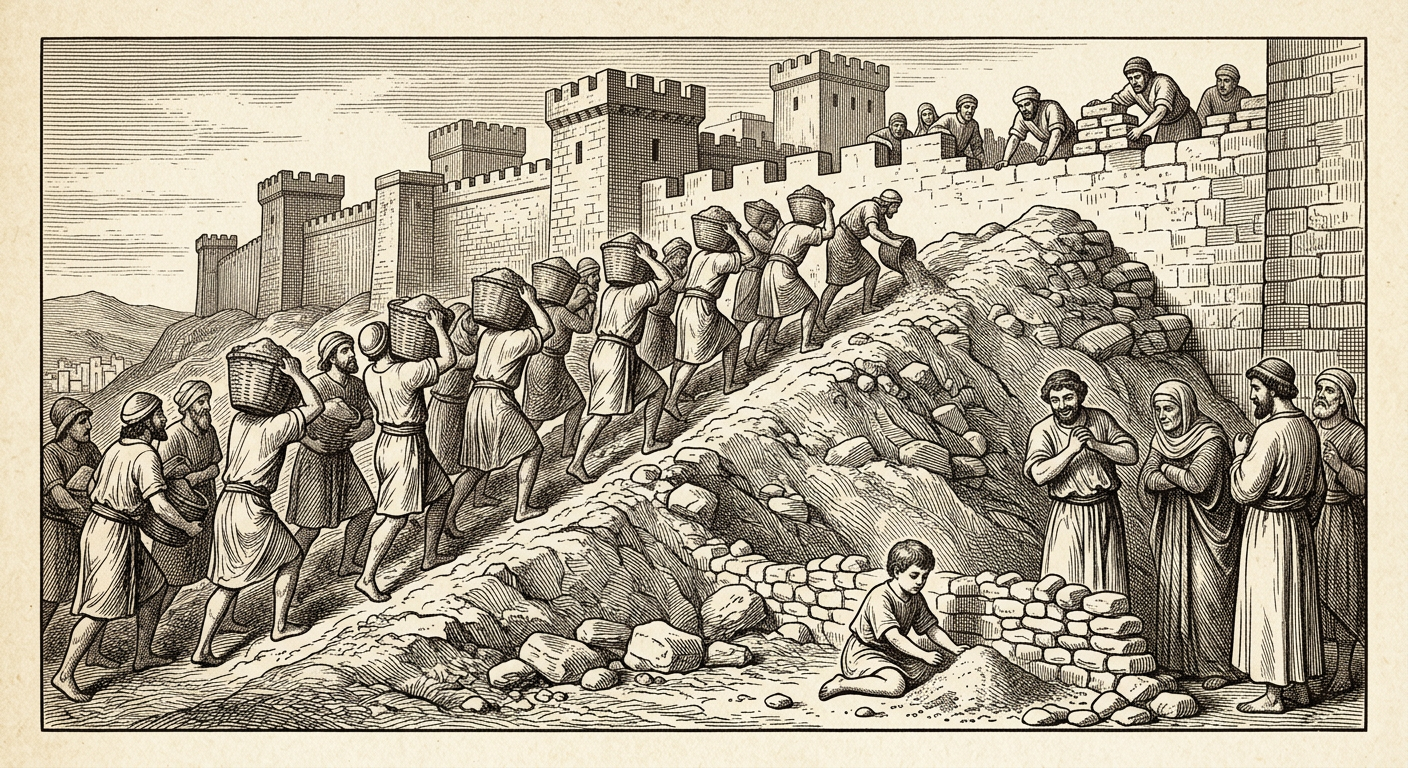
siege ramp
Read the word →The vault · fully free
Biblical Hebrew grammar library
The same explanations I write for students — how reading works, the binyanim, the grammar textbooks rush past. Not a teaser. The whole article.
Then
The app is a subscription. Lessons are a separate thing.
Flashcards Anki-style (add your own), reading, conjugations, quiz, conversation — none of that waits on a lesson. From $9/month. If you want a person across the table, that is the trial lesson.
What is the best way to learn Biblical Hebrew online with a real teacher?
I was born and raised in Jerusalem, and the Biblical texts were my schooling from childhood, in the original. I teach one-to-one, online by video, in English or French, and the practice between lessons follows what we read together.
Common challenges learning Biblical Hebrew
You've memorized paradigm charts but can't identify a verb form in an actual verse
Your textbook teaches grammar in isolation — disconnected from real Scripture reading
You can't tell the difference between Qal, Pi'el, and Hif'il in context — the verb patterns blur together
You studied vocabulary lists but don't understand how roots generate entire word families
I teach every lesson myself, from the text you want to read.
Who this is for
Synagogue & prayer connections
You follow along in the Siddur, you hear the Torah reading, but the meaning floats just out of reach. You want to understand what you're saying when you pray — not just pronounce it.
Seminary & Bible school students
You're in a program that requires Biblical Hebrew. Or you took two semesters and can barely parse a verse. The grammar tables aren't sticking. You need a different approach.
Torah scholars & serious learners
You study Torah weekly — Daf Yomi, parsha, midrash. You rely on translations but you know something gets lost. You want to see what Rashi saw, not what the English says Rashi saw.
Christians reading the Old Testament
You love the Hebrew Bible. You've heard that translations miss nuances — and you want to experience the original text. The poetry of the Psalms, the narratives of Genesis, in the actual Hebrew.
Your learning path
A structured curriculum — not just a pile of flashcards. Each stage builds on the last.
Aleph-Bet & Vowel System
Master the alphabet with full nikud, cantillation marks basics, and pronunciation of Biblical Hebrew (Ashkenazi or Sephardic track).
Core Vocabulary & Qal Binyan
The 300 most frequent Biblical Hebrew words cover 80% of the Torah. Master them alongside Qal perfect and imperfect conjugations.
Derived Binyanim & Syntax
Niphal, Pi'el, Hif'il, Hitpa'el, Pu'al, Hof'al. Biblical Hebrew syntax: waw-consecutive, construct chains, relative clauses.
Reading Full Passages
Parse and read complete sections: Genesis narratives, Psalms, Prophetic literature. Graded by vocabulary difficulty.
Independent Reading & Commentary
Read any Biblical text independently. Begin engaging with Rashi, Ibn Ezra, and classical commentators in the original.
Tools built for Biblical Hebrew
Root Explorer
Enter any root and see every form in the Torah — nouns, verbs, adjectives. One root like כ-ת-ב unlocks כָּתַב, מִכְתָּב, כְּתוּבִים, and more. See the family tree.
All 7 Binyanim — Biblical Forms
Biblical Hebrew's verb system IS the language. The drills take every binyan through actual Torah examples, not made-up sentences. Each pattern changes meaning systematically.
Nikud Toggle
Start with full vowels. Gradually remove them as you gain confidence. Biblical texts always had vowels — but eventually you want to read without training wheels.
Graded Scripture Reading
Every chapter of the Hebrew Bible is graded by how much vocabulary you already know. Start with the easiest passages, unlock harder ones as you grow.
Bridge to Modern Hebrew
Same roots, evolved meanings. Your Biblical Hebrew isn't a dead language — it lives in every Israeli conversation. I show you the connections.
Gateway to Aramaic
The Talmud is 50% Aramaic, 50% Hebrew. Your Biblical Hebrew is the foundation for Aramaic study. I take you there when you're ready.
Biblical Hebrew lessons with a native Jerusalemite, and between lessons the root explorer, the vowel toggle and all seven binyanim to practise with. I teach Modern Hebrew, Yiddish and Aramaic too.
"Seminary student here. I'd done two semesters of Biblical Hebrew in a classroom and could barely parse a verse. The Root Explorer changed everything — once I saw how one root generates 15 different words, the whole language clicked."
Jean-Noël — Montreal
Read the words as they were written
From ancient scrolls to illuminated manuscripts — these treasures waited thousands of years for you to read them.

The Great Isaiah Scroll
Dead Sea Scrolls, 2nd century BCE
The complete Book of Isaiah — over 2,200 years old and still readable

Biblical Scenes from Dura-Europos
Synagogue fresco, 244 CE
The oldest figurative synagogue art — Moses and Exodus in the Aramaic-speaking world

The Kennicott Bible
Moses ibn Zabarah, 1476
One of the most beautiful illuminated Hebrew Bibles ever created

Open Torah Scroll
Traditional Hebrew calligraphy
The same letters, the same words, read continuously for 3,000 years
One root, many branches
Biblical Hebrew shares roots with Modern Hebrew and Aramaic. Learning one deepens your understanding of the others.
Start reading Torah in the original today.
The vault is free, and so is the first lesson with me.
Book a trial lessonRather practise on your own? See the app plans
Want a live teacher on a smaller budget? Join a small Biblical Hebrew group